Communication and westward expansion

This week, both Avery and Sherwood wrote about different aspects of information technology in the early nineteenth-century United States, and two different approaches to the question of how news/information/learning “worked” in an expanding American nation.

Avery linked Round’s discussion of Native appropriations of American print and religious cultures to John’s discussion of the expanding postal system.  She also introduced a new theorist – Granovetter – who “proved that novel information tends to come from nodes that are not well-connected to the network (weakly tied to other nodes).”  I wonder how Native print culture would fit into Granovetter’s model – did American Indians mostly consume news from other sites of American news production, or did Indian print culture percolate into wider American information contexts?

Sherwood took a different approach to networks that connected Native and white Americans.  He pointed out that fluency in multiple languages (both English and Native syllabaries) allowed American Indians access to broader spheres of information.  One of the things we’ll discuss in class today is how much power those spheres actually gave Native peoples, and how they deployed that power.

Piling on Franklin

Cordelia’s title made me laugh aloud – but I also like that she points out how reified historical characters are often more complicated that simple historical narratives cast them.  This also links back to group B’s presentation, which reminded us that historical narratives and national myths are often consciously created, rather than naturally occurring.

I want to highlight a passage from Cordelia’s post, though, which I thought beautifully summed up the tension between what Franklin thought he was doing, and how we see him as historians:

Waldstreicher further mentions how Franklin’s print culture “had far more to do with slavery than previously believed” as runaways used their knowledge and skills to change their condition – an ideal that resided deeply with Franklin. Franklin, therefore, appears to only apply intellectual precepts to the white men who can make a difference in the printing or political world.

I hope we’ll get to this issue in class – how the structures of information transmission that enabled (according to some authors) the spread of revolutionary politics, also served to marginalize some people in the early United States.

Sherwood problematizes both articles for this class, and asks a question that is central to how we understand non-elite resistance in the early republic: How can we be sure that enslaved people (or the poor, or servants, or anyone else) were not simply reacting to their circumstances (running away) but were instead consciously fashioning themselves.  I hope we’ll talk more about this issue in class, and particularly about how to assess how historical actors felt about their quotidian actions, whether we can access those feelings, and what – as historians – we should do about them.

How early America sounded

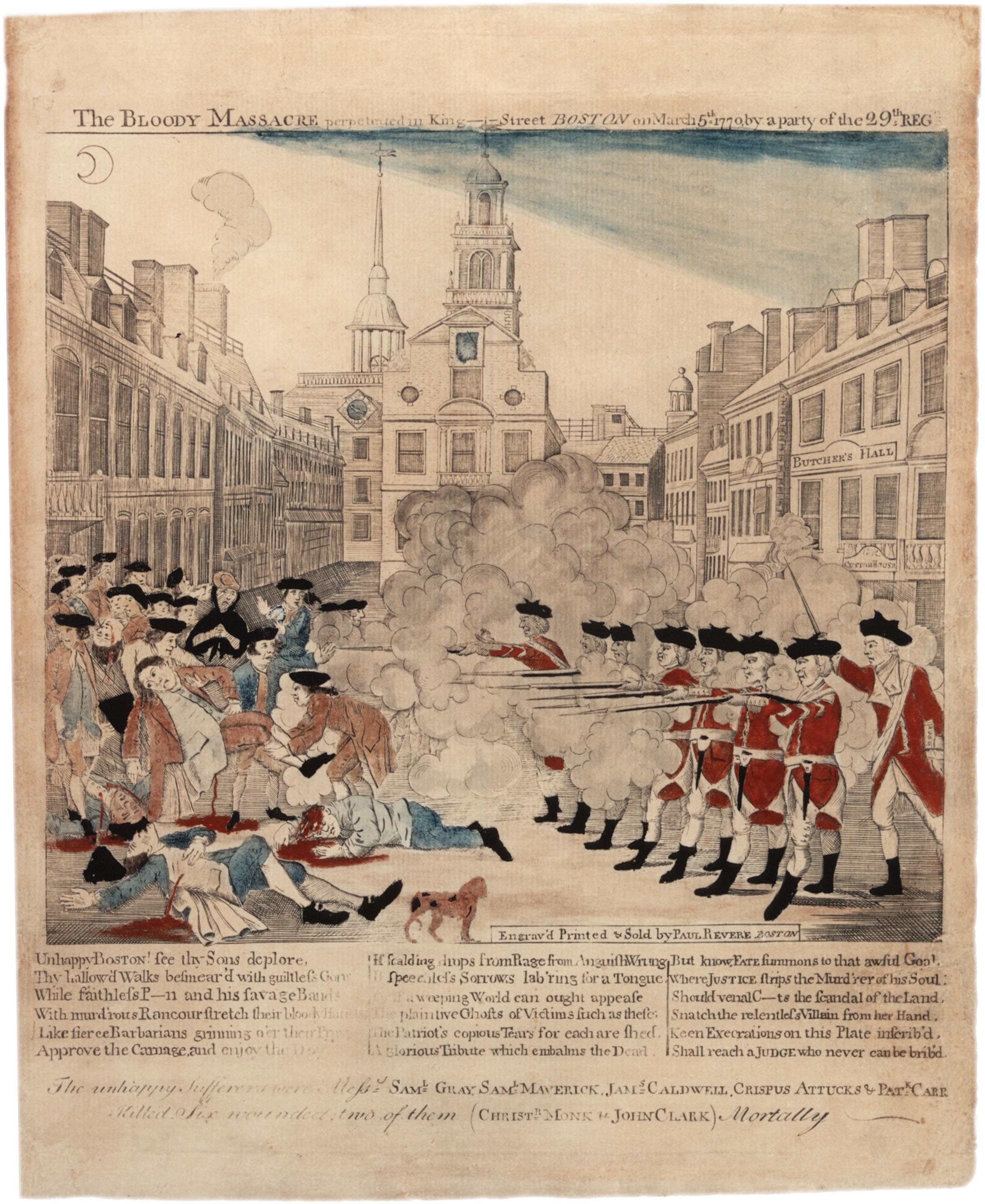
The Boren and Roginska article raises an interesting historical question – how did colonial Philadelphia (and by extension, other colonial cities) sound?  We are used to living in a world of amplified sound, but for people in colonial America – either participants in the Great Awakening listening to George Whitfield, or soldiers trying to hear the voice of their commanding officer over a crowd of rowdy Bostonians – the question of un-amplified (or, at least, un-electronically-amplified) sound transmission was crucial.

As Kurt points out, the Boren and Roginska article is multi-layered:  it re-examines an experiment conducted by Benjamin Franklin, which in turn tested a claim made by George Whitfield about the range of his voice in public speeches.  Kurt helpfully distinguishes between the kinds of experiential experiments that Franklin did, and the (more modern) math that Boren and Roginska employed.  I’ll be interested to hear how other students felt about the utility of these experiments.  What does knowing about the reach of public speeches in early America tell us about knowledge transmission?  Would you feel confident performing similar analyses of other public events?

Finally, Kurt does a very good job of connecting this work on Franklin to our earlier articles, pointing out that while Franklin might not have been solely responsible for print culture in America, his role as an innovator was certainly important to the development of early American scientific, political and information culture.  Reading this, it occurred to me that Franklin might make an interesting case study for a final paper for this class.

Networking the Revolution

In her post this week, Avery summarizes Emirbayer and Goodwin’s different approaches to social network theory, and then applies them to research she is doing with the Davidson MOOC (Massive Open Online Course) program.  Avery rightly notes that there are some key assumptions that underlay network analysis – most notably that we can determine intention and agency from historical actors’ participation in social networks.

In his piece on social network analysis of the American Revolution, Healy applies the techniques outlined by Emirbayer and Goodwin to what we know of the American Revolution.  I will be interested to hear in class whether you found Healy’s application satisfactory, and how you might apply his methodology to other historical questions.

Textual chickens and eggs

The pieces by Warner and Stout for this week both concern the creation of new communities – one through print and the other through speech.  These are simultaneous processes, but a reader of either article on its own might be forgiven for thinking that print developed separately from oral revolutionary culture, and oral revolutionary culture separately from print.

Cordelia helpfully points out that Franklin, though written about as a seminal “man of letters” might be a product, rather than a catalyst for the rise of a “republic of letters” (the same might be said of George Whitfield, the famous Great Awakening preacher).  I hope we can explore in class, though, the question of whether literary reactions are inevitable in a largely literate culture?  Under what circumstances do we expect oppressed populations to respond with text, and under what circumstances to we expect them to respond orally, or with violence?

Warner certainly presents a world where reacting literarily is the norm, but I think that Stout helpfully reminds us that other forms of resistance and popular culture were also possible.  I also think we might (in coming weeks) need to unpack the idea of the press as a cohesive body.  Certainly the reading for next Tuesday will show that there were many different circuits of Revolutionary communication.

Restrictive information economy?

The reading for today makes several sweeping arguments about American information technology from the early colonial era to the American Revolution.  Centrally, he contends that early American information was top-down and restrictive, in contrast to the more open information environment of the early republic.  Protestantism, Brown also posits, was central to this process.

Sherwood takes on this correlation between Protestantism and the opening up of information networks, contending that Protestantism’s central tenets were antithetical to hierarchies.  I’d add to his critique another which is that not all people in early America were Protestant.  I look forward to hearing more about how other religious structures would have impacted information access.

Avery continued to raise the themes that Sherwood brought up (and invoked the concept of priming, which is similar to framing).  She also raises another critique – that Brown tells a story of social progress – known in history as Teleology or Whiggish history – and fails to consider challenges to that narrative of progress.  I’ll add some more questions to those that Avery ended with.  In a world where only propertied white men could vote, can we really talk about an informed citizenry as being pervasive?  What about the information status of non-citizens?

A commonplace entry from the commonplace assignments

Now that all of the first blog posts have come in, I’m going to do the first of many commentary posts.  Mostly I’ll be pulling out interesting quotations from what you’ve written, and trying to tie the posts together somehow.

Avery raises an interesting point when she notes that “Moore was literate because her particular societal position granted her access to education, but Moore’s book does not exist only because she was literate. Moore produced the book, a cultural artefact, because of her personal “commitment to writing.”” This is important because, as (digital) historians, we have to remember to balance contingency with structure – that is, and as Eleanor also points out – Moore’s life was conditioned by her class status (structure) and gender (also structure) as well as by her own desire to write. Avery does a great job of balancing the credit we give to Moore for being an author and aggregator, and the larger structural forces that made her actions possible.

Avery also raised a fair critique of Wulf, when she noted that (for her) Wulf had failed to make the case that Moore was representative of Quaker culture.  As we go forward, we’ll try to flag these moments of discomfort with historical argument, as well as what specifically was lacking.

Eleanor also noted the similarities between the kind of work done in commonplace books and that done in blogs, while Aidan (with an excellentally punny title) compares commonplace books to wikipedia.  Alec, on the other hand, moves to Pinterest for his comparisons, contending that the creator of an object (digital or otherwise) has special access to the meaning of the material they collect, create and share.

This point links nicely with one made by Matt, that digital humanities make the world more accessible.  Just as Moore’s book shared information that she read beyond her and among her circle of friends, so to do digital humanities projects share information beyond the original creator.

Kurt and Cordelia helpfully sums up the state of the field – noting that there is much disagreement about the meaning of digital humanities, but notes future promise.


css.php